
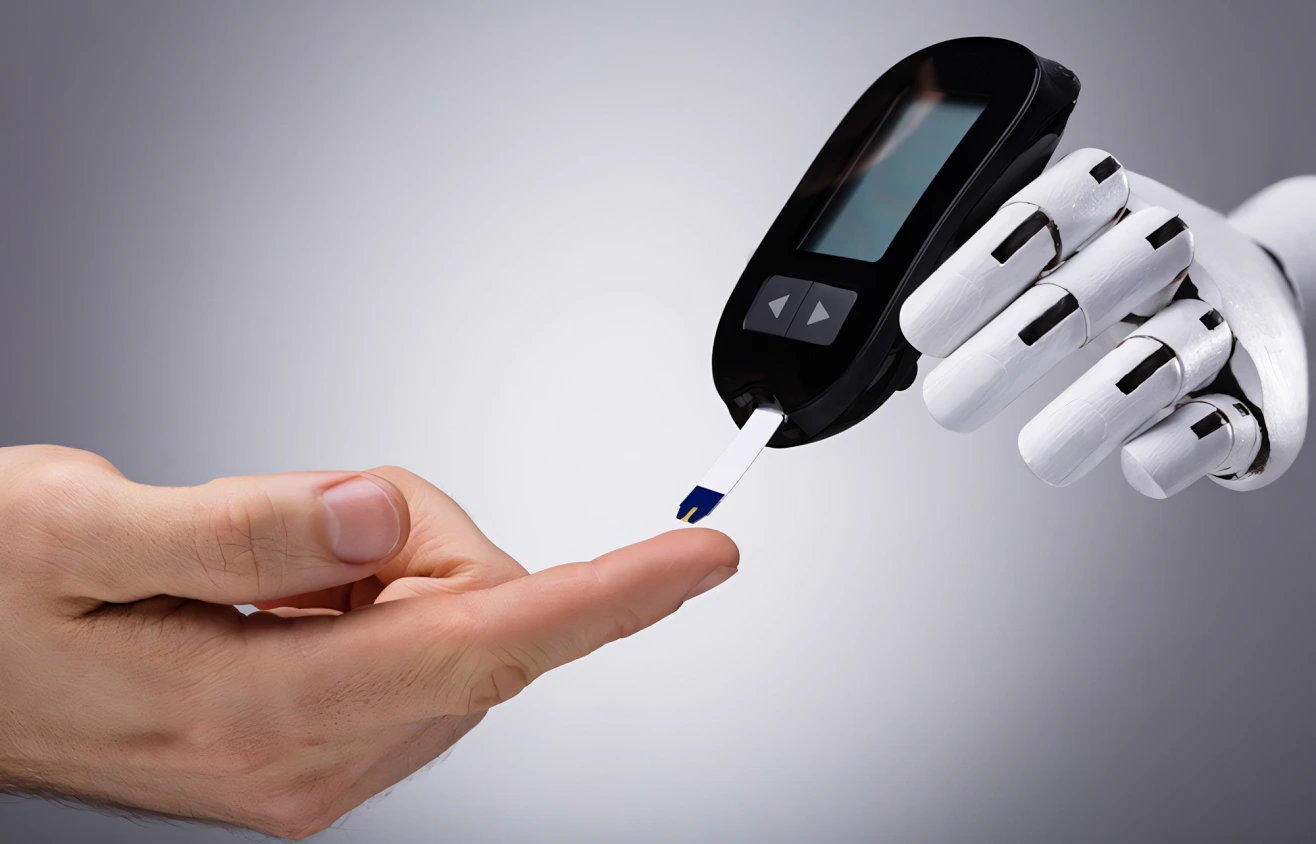
Insulins differ in onset, peak and duration, and the rules for dosing, storage interactions and missed-dose behaviour are often written in dense professional language. As a result, many patients get lost in the documentation's "fine print" and turn to unofficial sources. The AI assistant addresses exactly this problem: it extracts information from the official Summaries of Product Characteristics and patient leaflets and presents it in clear, structured and consistent language.
What it solves in practice
Better understanding of the therapy. When a patient asks "How quickly does my fast-acting insulin start working?" or "What should I do if I miss a dose?", the assistant returns accurate, brief answers grounded in the official text but explained in plain words. This reduces the risk of misinterpretation and strengthens informed patient participation in the treatment.
Faster access to reliable information. Instead of searching through multiple PDFs, the assistant delivers the specific rule (e.g. "inject before meals", "store refrigerated / at room temperature up to X days after opening", "do not mix with…") in seconds. It saves time for patients and their families, especially outside working hours.
Support for health literacy. Explanations include definitions ("peak action", "hypo/hyperglycaemia"), warning signs and self-help steps, so that even people with low medical literacy understand what they are doing and why.
How it works
The assistant uses the medicine-information standards: the Summary of Product Characteristics (for professionals) and the patient leaflet (for the general public). Answers are built on these sources and "translated" into accessible language, without creating new medical claims. It covers the most common topics: insulin type and pharmacokinetics (onset/peak/duration), method of administration and injection sites, compatibility, storage and shelf life, missed-dose behaviour, warnings, and when to seek a doctor immediately.
Limits of use and safety
The tool does not make diagnoses, change dosages or replace consultation with a doctor/pharmacist. In cases of severe hypoglycaemia symptoms or other emergencies, the response directs to immediate medical care. To limit risk, the assistant is designed to:
- base every answer on an official source and show the date of last update;
- avoid individual dose recommendations;
- flag uncertainty and direct to a specialist for unclear or risky cases; and
- protect confidentiality — no storage of sensitive data beyond what the conversation requires.
What results to expect
Research on conversational systems shows the potential for better recall of medication information, faster and more accurate answers to frequently asked questions, and higher patient satisfaction when the content is validated and delivered in clear language. In diabetes specifically, chatbots have been evaluated as useful for education and self-management, provided there are clear limits and clinical oversight of the content. Not every intervention drives behavioural change on its own — that is why the tool is most effective as part of a broader programme: regular visits, training with a diabetes educator and follow-up.
Why this matters especially for insulin
Different insulin types — rapid-acting, short-acting, intermediate and basal — have different windows of action. Misunderstanding when they start, when they "peak" and how long they last leads to missed doses or overlapping effects, which increases the risk of hypo/hyperglycaemia. Clear, contextual explanations reduce confusion and support routine (e.g. before/after meals, injection site rotation, storage after opening).
Where it fits in the system
The AI assistant is a "first line" for orientation — 24/7, no waiting and no extra burden on clinics and pharmacies. It is a companion to clinical care, not a substitute: it helps the patient come to the visit better prepared, ask precise questions and follow the prescribed plan. This combines the convenience of digital access with the safety of professional medical practice.
Sources
- European Medicines Agency – Summary of Product Characteristics (SmPC)
- EMA – Product information requirements (SmPC, PIL)
- Readability of patient information leaflets for antidiabetic medicines
- Conversational agents to explain medication information (improving understanding and recall)
- Systematic review (2024): Chatbots for diabetes self-management
- NLM (2024): Chatbots in Health Care – benefits and limitations
- BMJ Quality & Safety (2025): Accuracy of AI chatbots on drug FAQs
- CDC: Types of insulin (onset/peak/duration)
- ADCES: Insulin types – patient education resource
- WHO guideline on digital health interventions
- Safety and quality of AI chatbots for drug-related inquiries (GPT-4)
- EU user testing policies for patient leaflets (readability)